Frequency Booth
Frequency Booth
The Frequency Booth is a meditation booth for personalized meditation that works through the use of sound and light therapy. The booth's sensors analyze users' biometric data in real time, both physical and mental. Artificial intelligence translates this data to create personalized meditations. Placed strategically in community centers, public spaces and workplaces, these booths act as soundproof and lightproof places of retreat.
Note: role labels apply to all genders.
The Frequency Booth is a meditation booth for personalized meditations that works through the use of sound and light therapy. The booth's sensors analyze users' biometric data in real time, both physical and mental. Artificial intelligence translates this data to create personalized meditations. Placed strategically in community centers, public spaces and the workplace, these booths act as soundproof and lightproof places of retreat.
Role
Research
User Experience
3D Design
Product Design
Timeframe
Oct 2023 - Feb 2024
Role
Research
User Experience
3D Design
Product Design
Timeframe
May 2022 - July 2022

Frequency Booth in a public space
Frequency Booth: a counterbalance
to a hectic lifestyle
Frequency Booth: a counterbalance
to a hectic lifestyle
In a seminar project we were given the following challenge: design a futuristic product that solves the problems of tomorrow. Our task was to think speculatively and realistically at the same time. Even today, in our digital world, we struggle with a flood of stimuli: constant online presence, endless availability and captivating algorithms. This modern way of living comes at a price: stress, mental strain and exhaustion are the result.
My goal was to take on exactly these challenges and design a product that actively helps us recover and regenerate. My vision was based on the understanding that technology is not the problem, but can be part of the solution when it is designed and used well. The Frequency Booth creates a new balance, between the benefits of modern technology and our need for recovery. Given the broad nature of this project, I decided to focus on three core elements of the Frequency Booth:
Sound: The effect of sound frequencies
Light: Health-supporting light therapy
Seat: Adjustable comfort for optimal meditation
Research and user focus
Research and user focus
Even though the Frequency Booth is a speculative project, a user-centered approach mattered a lot to me. A central aspect was the idea of enabling personalized meditations through sound and light therapy, technologies that are not yet widely researched or integrated in UX design. So I invested a lot of time in thorough research and the analysis of scientific studies, to understand the effects of light and sound on the human body and to make sure my idea is not only innovative but also effective.

Light frequencies of the Frequency Booth
Light frequencies
Light frequencies play an important role in our lives and can have both positive and negative effects on us. Natural sunlight wakes us up, while bright screens with blue light slow down falling asleep. Light can harm our skin or heal it, lift our mood and even fight depression. The basis of the user research was therefore a thorough analysis of studies on the effects of light on the human body and mind. After that I summarized the different types of light and their effects briefly and clearly.
Sound frequencies
The Frequency Booth's sound wave therapy uses special sound frequencies that adapt to your individual brainwave pattern. It ranges from stimulating to relaxing frequencies or even complete silence, and aims to improve brain health, regenerate cells, promote relaxation and reach deep meditative states. This innovative instrument offers a publicly accessible way to support well-being as well as mental and physical recovery.
The "right" way to sit, designing for everyone
Designing the seat for the Frequency Booth was a challenge, since different types of meditation can have different pros and cons depending on the person, age and other factors.
To get insight into how people experience sitting, I read Amazon reviews of chairs and meditation benches. I noticed that the seats were comfortable for some and painful for others, too small for some and too big for others. At first I developed several sketches of static benches, but the reviews showed me that these designs did not solve the problem.
I threw out all previous designs and chose a more flexible approach: a seat that rotates and extends and allows a variety of positions, including seiza meditation, Burmese meditation, the lotus position and normal sitting. This versatility ensures a comfortable experience for users of all sizes, genders and levels of experience.
To develop a realistic seat, I teamed up with a friend who studies mechanical engineering. Together we developed a seat solution that would work in practice. Since we worked with limited resources, we chose a more low-tech solution instead of going for a highly complex high-tech version.

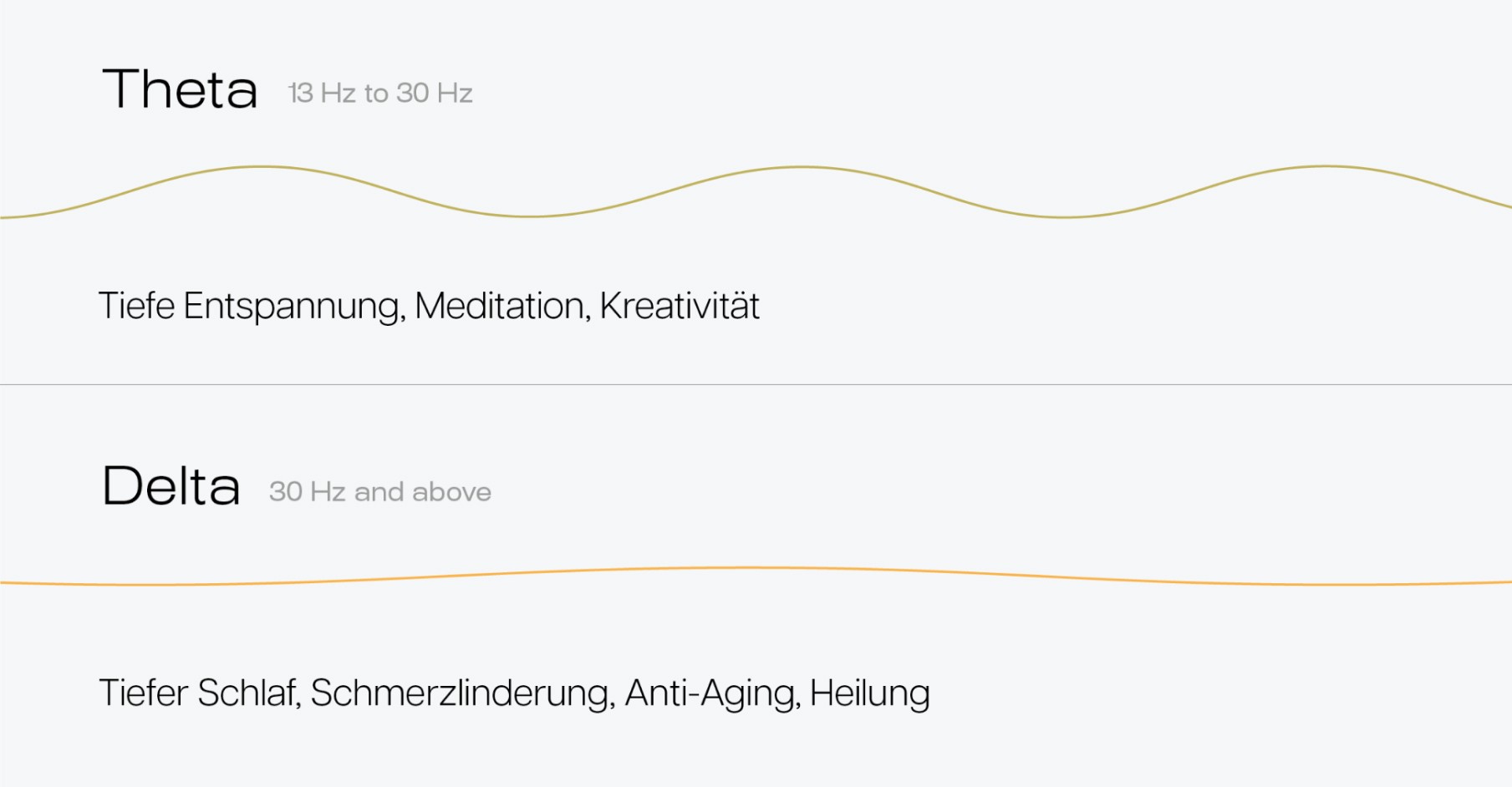
Sound frequencies of the Frequency Booth
The "right" way to sit, designing for everyone
Designing the seat for the Frequency Booth was a challenge, since different types of meditation can have different pros and cons depending on the person, age and other factors.
To get insight into how people experience sitting, I read Amazon reviews of chairs and meditation benches. I noticed that the seats were comfortable for some and painful for others, too small for some and too big for others. At first I developed several sketches of static benches, but the reviews showed me that these designs did not solve the problem.
I threw out all previous designs and chose a more flexible approach: a seat that rotates and extends and allows a variety of positions, including seiza meditation, Burmese meditation, the lotus position and normal sitting. This versatility ensures a comfortable experience for users of all sizes, genders and levels of experience.
To develop a realistic seat, I teamed up with a friend who studies mechanical engineering. Together we developed a seat solution that would work in practice. Since we worked with limited resources, we chose a more low-tech solution instead of going for a highly complex high-tech version.

Seat sketches

Final seat renderings
Research into form and material
The shape of the Frequency Booth was deliberately designed as a rectangular model, to save space and resources. But rounded, soft corners were used to create a sense of comfort and safety. This design is meant to give users the feeling of being welcome and protected while they are inside the booth. Since many people suffer from claustrophobia, I made the booth taller than sitting would require, roughly the height of an average door. The design of the Frequency Booth is minimalist and appealing, to speak to a wide range of users. It conveys a medically serious yet comfortable atmosphere that encourages users to relax and recover.

Booth form sketches

Frequency Booth materials
My learnings
My learnings
For personal projects it is essential to set yourself realistic constraints, so you gain hands-on experience with real challenges. During this case study it became clear to me again how fundamental thorough research is for building a successful design.
On top of that I realized how valuable collaboration is, especially when working in new areas. You should not be afraid of "basic" questions and should ask others for help, because that is the only way to learn.

Frequency Booth light (final renderings)
Next project
A platform for creative studios.
As co-founder I design Stu, a platform for easily booking and renting studios and for hiring creative talent.

The "right" way to sit, designing for everyone
Designing the seat for the Frequency Booth was a challenge, since different types of meditation can have different pros and cons depending on the person, age and other factors.
To get insight into how people experience sitting, I read Amazon reviews of chairs and meditation benches. I noticed that the seats were comfortable for some and painful for others, too small for some and too big for others. At first I developed several sketches of static benches, but the reviews showed me that these designs did not solve the problem.
I threw out all previous designs and chose a more flexible approach: a seat that rotates and extends and allows a variety of positions, including seiza meditation, Burmese meditation, the lotus position and normal sitting. This versatility ensures a comfortable experience for users of all sizes, genders and levels of experience.
To develop a realistic seat, I teamed up with a friend who studies mechanical engineering. Together we developed a seat solution that would work in practice. Since we worked with limited resources, we chose a more low-tech solution instead of going for a highly complex high-tech version.
Research into form and material
The shape of the Frequency Booth was deliberately designed as a rectangular model, to save space and resources. But rounded, soft corners were used to create a sense of comfort and safety. This design is meant to give users the feeling of being welcome and protected while they are inside the booth. Since many people suffer from claustrophobia, I made the booth taller than sitting would require, roughly the height of an average door. The design of the Frequency Booth is minimalist and appealing, to speak to a wide range of users. It conveys a medically serious yet comfortable atmosphere that encourages users to relax and recover.
Next project
A platform for creative studios.
As co-founder I design Stu, a platform for easily booking and renting studios and for hiring creative talent.
Research into form and material
The shape of the Frequency Booth was deliberately designed as a rectangular model, to save space and resources. But rounded, soft corners were used to create a sense of comfort and safety. This design is meant to give users the feeling of being welcome and protected while they are inside the booth. Since many people suffer from claustrophobia, I made the booth taller than sitting would require, roughly the height of an average door. The design of the Frequency Booth is minimalist and appealing, to speak to a wide range of users. It conveys a medically serious yet comfortable atmosphere that encourages users to relax and recover.
My learnings
For personal projects it is essential to set yourself realistic constraints, so you gain hands-on experience with real challenges. During this case study it became clear to me again how fundamental thorough research is for building a successful design.
On top of that I realized how valuable collaboration is, especially when working in new areas. You should not be afraid of "basic" questions and should ask others for help, because that is the only way to learn.
Frequency Booth:
a counterbalance to a hectic lifestyle
In a seminar project we were given the following challenge: design a futuristic product that solves the problems of tomorrow. Our task was to think speculatively and realistically at the same time. Even today, in our digital world, we struggle with a flood of stimuli: constant online presence, endless availability and captivating algorithms. This modern way of living comes at a price: stress, mental strain and exhaustion are the result.
My goal was to take on exactly these challenges and design a product that actively helps us recover and regenerate. My vision was based on the understanding that technology is not the problem, but can be part of the solution when it is designed and used well. The Frequency Booth creates a new balance, between the benefits of modern technology and our need for recovery. Given the broad nature of this project, I decided to focus on three core elements of the Frequency Booth:
Sound: The effect of sound frequencies
Light: Health-supporting light therapy
Seat: Adjustable comfort for optimal meditation
Light frequencies
Light frequencies play an important role in our lives and can have both positive and negative effects on us. Natural sunlight wakes us up, while bright screens with blue light slow down falling asleep. Light can harm our skin or heal it, lift our mood and even fight depression. The basis of the user research was therefore a thorough analysis of studies on the effects of light on the human body and mind. After that I summarized the different types of light and their effects briefly and clearly.
Sound frequencies
The Frequency Booth's sound wave therapy uses special sound frequencies that adapt to your individual brainwave pattern. It ranges from stimulating to relaxing frequencies or even complete silence, and aims to improve brain health, regenerate cells, promote relaxation and reach deep meditative states. This innovative instrument offers a publicly accessible way to support well-being as well as mental and physical recovery.
Research and user focus
Even though the Frequency Booth is a speculative project, a user-centered approach mattered a lot to me. A central aspect was the idea of enabling personalized meditations through sound and light therapy, technologies that are not yet widely researched or integrated in UX design. So I invested a lot of time in thorough research and the analysis of scientific studies, to understand the effects of light and sound on the human body and to make sure my idea is not only innovative but also effective.
Next project
A platform for creative studios.
As co-founder I design Stu, a platform for easily booking and renting studios and for hiring creative talent.
Light frequencies of the Frequency Booth