Stu is a platform for booking and managing creative studios and locations. As digital product designer I owned product strategy, UX research, UX/UI design, the design system and branding of the web and iOS platform, from the first interviews and prototypes to launch.
I worked closely with two developers and tested the platform with more than 40 studios. By now over 60 studios are on it, the first bookings have been completed, and providers can onboard and manage themselves.
Note: role labels apply to all genders.
Role
UX Design
Product Design
Co-Founder
Timeframe
May 2024 - Today
Stu search
One of our founders spent a long time in an unfamiliar city looking for the right studio for his musical dream, without success. No clear place to start, missing information about studios and producers, endless phone calls, complicated bookings. The market was opaque: big brands often charged more for their name, and studios are hard to compare. Out of that frustration came the vision to completely rethink the market for creative studios.
Users should be able to find the right studio in a few steps, view it in detail and inquire directly. Providers present their studios and services individually, market them efficiently and manage everything through an integrated calendar tool. Safe and reliable.
Studios benefit in three ways:
More reach through our social media channels and advertising
a free online presence with photos, descriptions & portfolio
a booking and management tool
Stu is meant to become a strong, unique brand: user-friendly, intuitive, professional, stylish and welcoming at the same time.
The original vision was big: creatives, equipment and models, bookable even independently of studios. But vision and focus are two different things. As a startup the rule is: better to do one thing right than many things halfway.
So we focused on creative studios in terms of content, and on Cologne and Düsseldorf geographically. Instead of spreading 60 studios across all of Germany, we concentrated resources, advertising and outreach in one small market. That way stu offers real choice and market density.

Stu promo video (careful: sound)

Searching for studios is confusing and frustrating: unclear information, spread across many websites.
Our solution: a search by studio, location, date and time. Advanced filters like price, equipment and tags make it more precise. That way users quickly find the right studio.
Creative projects are often more about being inspired than searching for something specific. Categories like music, photo or video studios, tags and the interactive map make discovery more flexible. Large, full-screen studio photos in the feed invite exploring, clear and without distraction.

Home screen & feed: early and current UI
Stu feed (mobile)
The stu home page is deliberately simple, to keep the focus on what matters most. Many users are overwhelmed by cluttered platforms and do not see the real value. That is why we rely on clarity and a clear call to action: the slogan "Your idea. Your studio." and the prominent search bar for a quick, targeted search.
Anyone who wants to browse reaches studios from all categories through the "All studios" button, and can filter further from there.
Stu home page & feed (desktop)
In the usual way of searching for studios, clear information about price, availability, equipment and extra creatives like photographers is often missing. That leads to back and forth questions and unnecessary delays.
After interviews with people who rent studios, we designed the studio page so that all the important information, price, availability, equipment, studio size, reviews and more, is visible at a glance.
We highlight studios with especially good reviews and many bookings with a "top studio" badge.
Stu studio page (desktop)
The mobile version keeps the clear structure, optimized for small screens: a fixed bar at the bottom always shows availability and price, so users can book quickly at any time.
Searching for creative talent is unclear: reviews, services, prices and availability are missing, which leads to back and forth questions. Creatives usually have to market themselves through social media.
Our profiles pull reviews, bookings and services together clearly: users see experience and current services right away. The portfolio is flexible, so creatives can present their work in their own formats and styles.
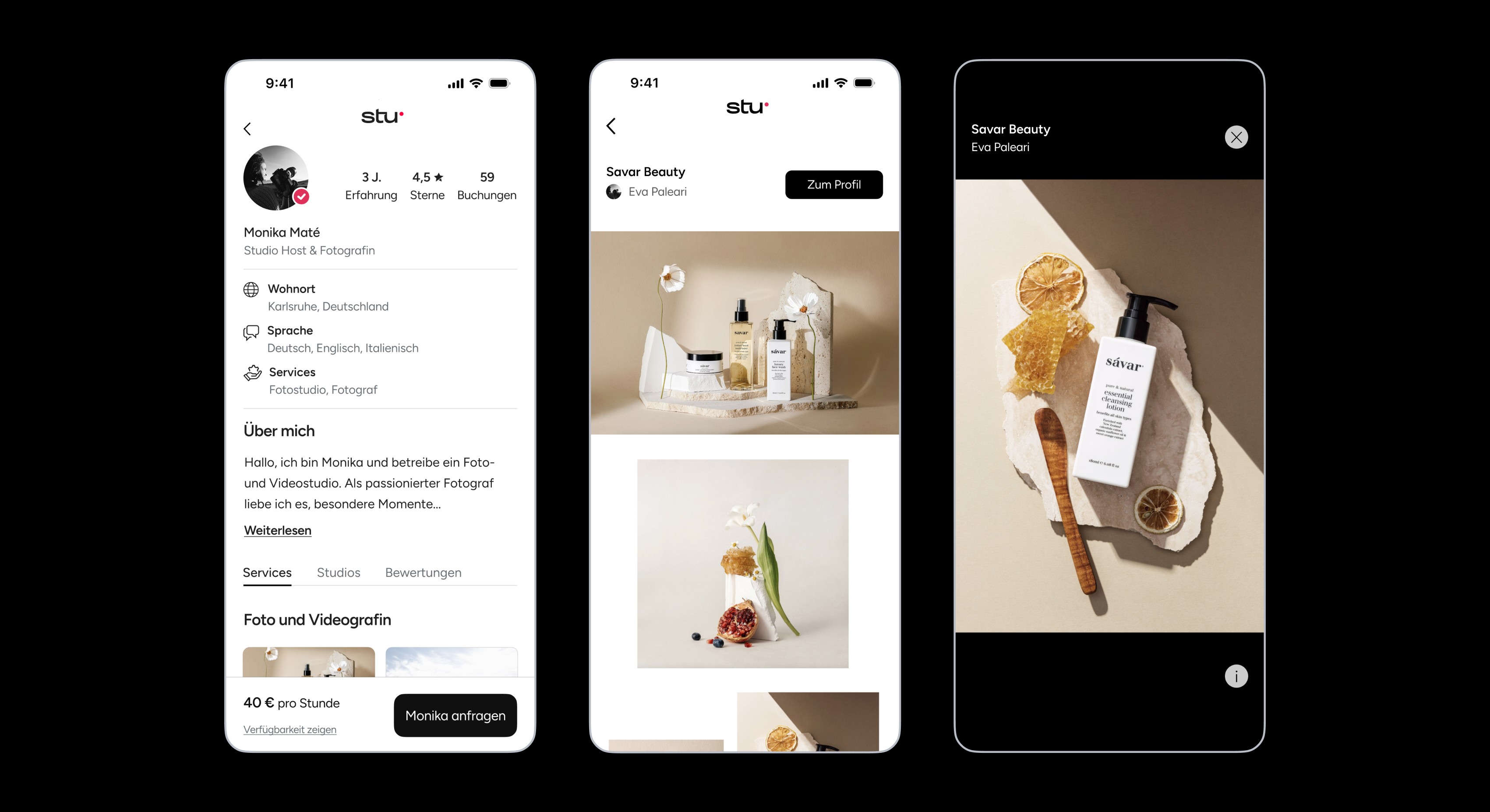
Stu creative profile
Missing contracts, unreliable payment methods and no-shows cause unnecessary stress in the creative industry. Creatives often do not know when they will be paid, and booking processes are inconsistent and unclear.
Our solution: clarity and security in a few clicks. All booking details, price, availability, extra equipment, are visible at a glance and adjustable in real time. The host gets a message and request and confirms within 24 hours. Cancellation terms and payments are transparent, so users can book safely and without delays.
Stu booking
Stu launched in July 2026. Since then more than 60 studios are on the platform, the first bookings have been completed, and studios can onboard themselves and manage their listings. At the same time stu keeps gaining new users and partners.
The biggest challenge was the handoff between design and development, especially at the start. Regular meetings and precise documentation improved communication, and a design system made the design more consistent. I could design faster and the developer could code more efficiently. Fast AI prototyping made this much easier too.
As the only designer, I was responsible for branding, user research and product design: a role that was demanding and pushed me forward enormously.
At the beginning I designed too much based on assumptions, without talking to real users. A lot had to be changed afterwards, and we had set the wrong priorities. From that I learned to question every assumption, no matter how certain it sounds.
